This Summer, our two kids and I were diagnosed with autism. So what did I do? Start running, of course! Here’s why.
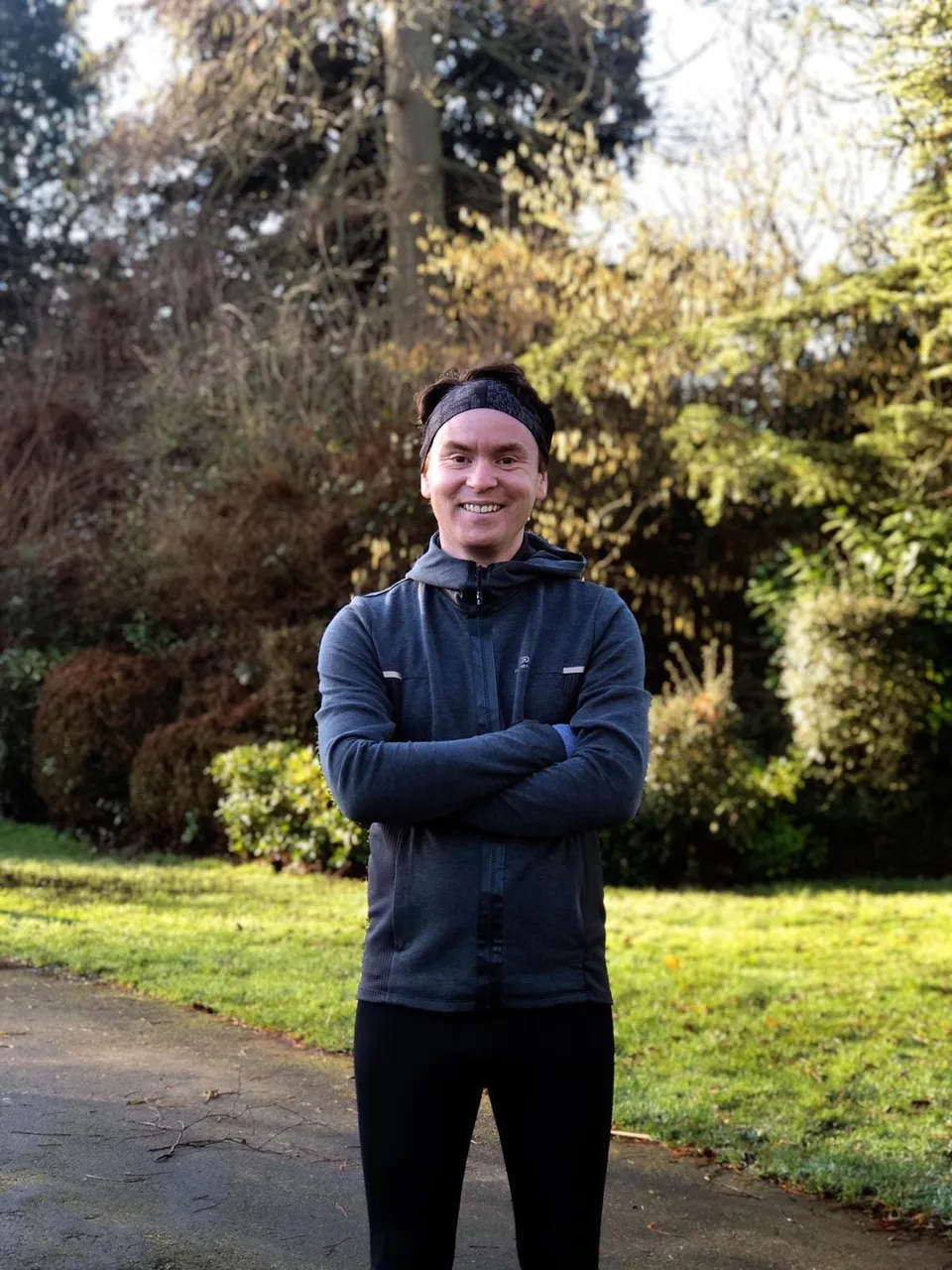
It was the end of the Summer, and a switch labelled “go for a run” seemed to flip on in my head. That switch is still stuck in the “on” position six months later!
This week I heard that I have a place in this year’s London Marathon, so I thought I’d share my running story from couch to track, and why I’m running to raise awareness about autism.
I’ve never really been a long-distance runner, or indeed someone who would even refer to themselves and include the word “run” anywhere.
At school (that was a long time ago now!) I used to enjoy sprinting. I was pretty fast, but I was injured in a race at about 16 and never really ran again.
Well, until now.
Running hasn’t come naturally to me. Modern life and work for many people seem to revolve around screens, and I took to that life earlier than most because of my combined interests in graphic design and computer science. Both involve a lot of screen-based work.
Looking back at my twenties and thirties, the only exercise I got was general walking around at an impatiently fast pace or going out dancing at night. I’ve never really felt comfortable going to a gym, or involving myself with sporty things — it’s always felt like someone else’s world. One where I don’t know the rules, what I’m supposed to do or even wear.
So most of the time, I’m in front of a screen. My work happens in front of a screen. And even my side projects mostly revolve around making digital things on a screen. That’s not a great recipe for leading a healthy life.
I’ve increasingly noticed that being desk-bound has led me to feel stiff and inflexible. But worse than that. As my kids have been growing up, simple things like carrying them up to bed have also been getting more challenging. I’ve never felt particularly strong, and somehow I’d hoped that at this point in our family life we’d be taking them off for outdoorsy adventures. But on the occasions where we’ve done that I’ve often found myself with a pulled muscle or feeling puffed out.
Something needed to change, but until relatively recently, I’d felt unable to do anything about it. In the meantime, I’d been gaining weight each month, and also having a lot of difficulty with feeling stressed out and not sleeping well.
You can’t change what you can’t measure
The first shift happened in mid-2018 when I bought some life insurance and went with Vitality because they offered a “free” Apple watch. It’s free if you reach a certain level of physical activity each month. So with an attitude of “you can’t change what you can’t measure”, I signed up, got my watch and started monitoring my steps and heart rate.
For me, that one step — finding a way to measure my activity levels — was helpful in many ways that I wasn’t expecting. First, I realised that actually, I was walking a lot more than I had thought. That was reassuring. But the most significant immediate effect was improving my understanding of my heart.
In my family, there’s a history of heart problems. My dad suffered a heart attack in his forties, and I realised that I’d had a background level of stress about the same thing happening to me. The watch showed me that I wasn’t having any heart palpitations (even when I thought I was), and everything was relatively healthy, which was great news. But for several years I’d been stressed out, and that worry about my heart health had been causing something of a feedback loop — the more I felt stressed, the more I felt stressed about being stressed!
There’s a theme running through much of what I’ve experienced over the last few years, and I’m sure my wife Emily will roll her eyes at this. People can tell me the same thing over and over again, and I somehow put what they say to one side and find it hard to act on feedback that involves changes in my habits. But at some point, I’ll read something, or come to a conclusion through my thought process, and then suddenly it’s as if I’ve had a fantastic, novel idea that I have to put into action. It just happens to be precisely the same thing that people have been telling me for several years!
Disco leg
Drinking coffee was one of my regular habits — a lot of coffee. Back in 2018, I’d got to the point where I was drinking an entire caffetière every morning before I left the house, and then several coffees throughout the day. Some of my relatives are doctors, and they’d tell me occasionally when visiting that I really was having quite a lot of coffee. Hint hint. But it was only once I had the Apple Watch to do an experiment that I noticed that reducing my coffee was helping with my stress levels. Gradually over a few months, I weaned myself off, and for the last eighteen months or so, I’ve entirely cut it out.
My new coffee-free, less up-and-down self has come as something of a revelation. I’m not always feeling stressed out — it just was that I was hyped up on caffeine a lot of the time. My creative output has slowed somewhat, but goodness me, so has the confused flitting-around, vibrating “disco leg” and the intermittent inability to concentrate on one single task at a time.
So, I’d made a significant change, and was feeling better about myself in terms of how stressed out I was. But one thing that I wasn’t expecting was what would happen to my weight. The “disco leg” effect that I’d lived with for maybe twenty years meant that even when sitting still, I’d be more or less continually moving. Quite irritating for those sitting around me, I’m sure. But great for weight-loss, apparently!
Up and to the r̶i̶g̶h̶t̶ wrong
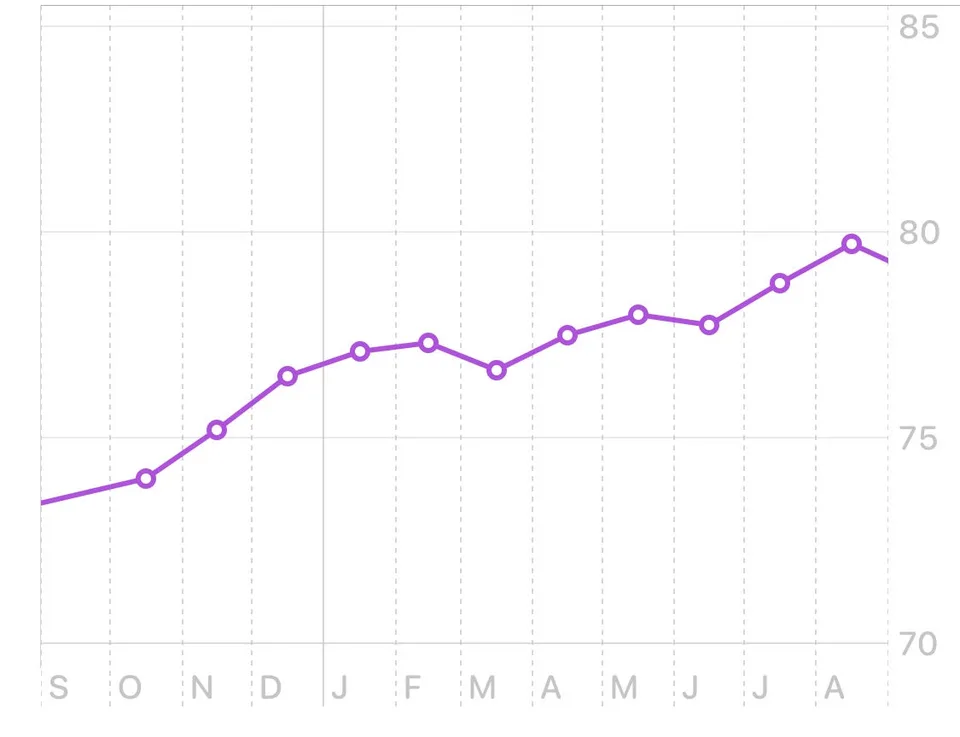
I know this isn’t in the realms of being significantly overweight, but I started 2019 at 74 kilos, and by August I’d hit nearly 81, and I was into the “overweight” category for my height, with no signs of slowing. Yikes!
For most of my adult life, I’ve also developed a need to have a regular afternoon nap. Strangely enough, if I’d drunk too much coffee, it would often mean I had to go to sleep, and I thought it was related. But having eradicated the coffee addiction, the naps were still there. And also something a little worse.
The dreaded lethargy
I’ll talk a little more about this towards the end of the article. Mixed in with all the hyperactivity of the coffee-fuelled days, I also had a habit — I’m not sure how to put this really — of just not being able to get out of bed very quickly in the mornings.
Some weekends I’d struggle to get going for hours, and when you’re a father of four, it’s just not fair for everyone around you, particularly for your wife, to not be able to pitch in equally. I’ve always wanted to be less sluggish in the mornings, but I’d not found a way to address it.
Sadly, cutting coffee didn’t significantly reduce that lethargy. It probably helped, but it was still there. For those of you who know me, it may be quite surprising to hear that I’ve struggled with this because I’ve always tried to have a very high output level of creativity. I’ve certainly found it quite difficult to square the two sides of who I am, and I know that the family have found it confusing at times.
Are the kids… autistic?
As a family, we’ve had a fair few things to work through over the last couple of years. Emily and I have four children together, so it’s a busy household with lots going on pretty much all the time. Now, all families have their peculiarities, and all children have individual needs, strengths and behaviours that mean you have to adapt your parenting technique to support them.
For us, we’d been struggling for some time to understand two of our kids. Emily spent some time reading and became convinced that they weren’t being naughty, they were autistic, and we needed to adapt our home environment and parenting style to support them.
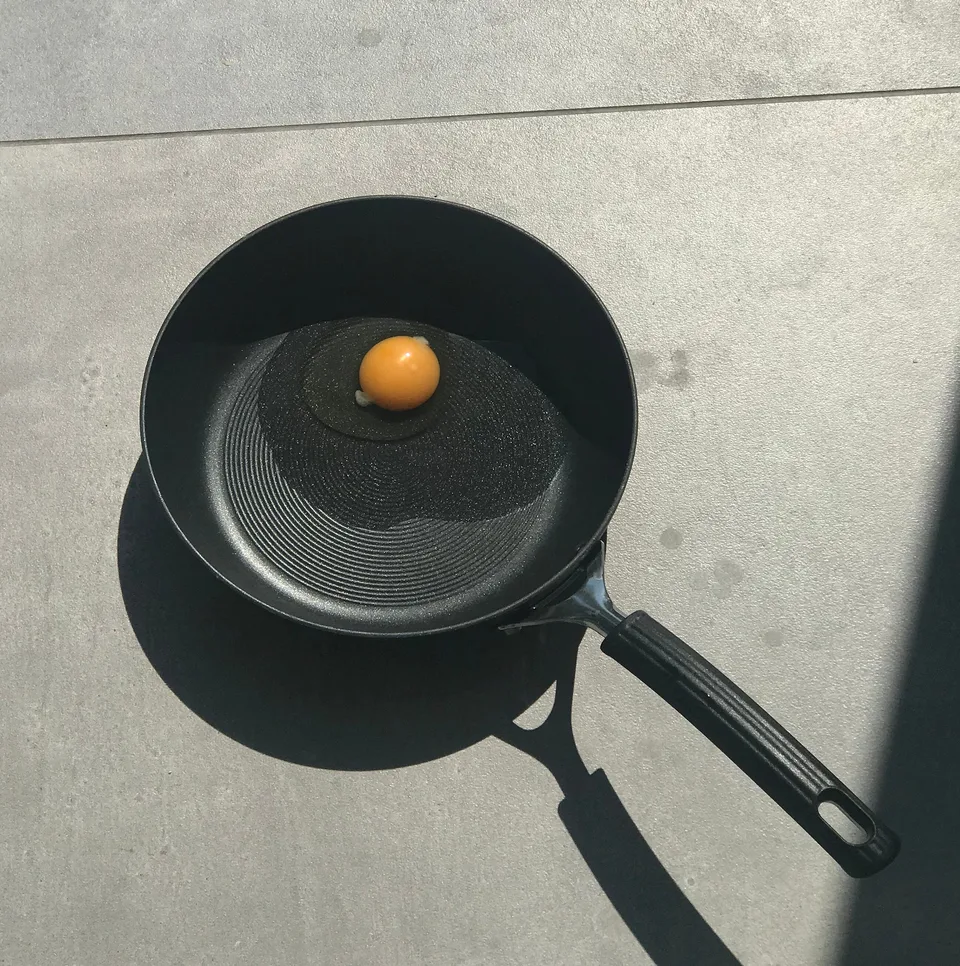
So, it’s August 2019. The Summer is in full swing. We’re running an experiment to see if we can cook an egg on the floor of our kitchen in the heat, as you do!
And we’d recently received confirmation from qualified autism professionals that Emily was right.
We were pleased about the diagnoses because it meant we could get the right support in place, and we could stop wondering whether we were wrong about our conclusions.
Wait… am I too?
Throughout the diagnosis process, I read about autism, and the more I read, the more empathy I had for what I found, and for how the children are. A lot of what I read seemed very familiar to me. Getting absorbed by whatever you are focused on and not hearing people speaking to you. Loving understanding a topic to a deep level. Jumping from topic to topic in a way that to others seems disjointed. Arranging things into patterns. These all felt like things that I experience. I could empathise a lot.
So I went for a diagnosis myself. It took a while to get an appointment, but August rolled around. I went for a pleasant interview, discussed how I see the world, how I find that I behave, some of the quirks that I’ve spotted in myself over the years, and answered questionnaires about my preferences. And I came home with the same result as the kids, with potentially ADHD in the mix too. That will probably explain the multiple browser windows I have open right now as I write this, each one with so many tabs open that I can only see a string of icons.
I was pleased to finally have some answers to questions about why I’ve always felt somewhat different from those around me. Why is it that I’m happy tweeting my heart out to strangers, but can’t respond to text messages from friends without worrying about it for days or weeks? Why do I always get wiped out for days after social events? Why do I get so frustrated when someone asks me to do something that is clearly stupid and wrong (in my opinion — it probably isn’t)?
A positive experience for the family
On the positive side, and there are tons of positives here, I now understand a lot more about my approach to life and work. For instance, why I’ve obsessed about finding “flow” in my work. Or how I’m good at connecting up disparate ideas and putting them together in a way that seems obvious to me, but innovative to others.
There’s a lot of talk about how autism is a “spectrum”, but as I understand it, it’s more of a bag of traits. Some folks have traits that some would describe as more severe than others, or indeed a mix of characteristics entirely different to another person in the autism category. If you’ve met me in person, you might be surprised that I’d be in the same category as perhaps someone who has more obviously autistic behaviours.
After my diagnosis, I felt a rush of clarity over the following weeks, and I now wish that I’d done it earlier in life. I’m in my early 40s, and looking back at my 20s and 30s I can see how if I’d known about my strengths and weaknesses a little more, I’d have avoided some of the more frustrating moments. You know — the ones that I am always running over in my head again and again — another autistic trait!
Enter a fantastic little app called Couch to 5K
The revelations continued that month. One of the requirements of the “free” Apple watch deal I mentioned is that you have to get a regular health check-up. So I went in for mine and had something of a surprising result. My cholesterol (or rather one type, the not so positive type) was registering as “high”. Not scarily so, but enough to make me stop and think. As I said, there’s a history of heart disease in my family, and this wasn’t a great sign. Maybe in this time of self-reflection, I should look again at that exercise thing?
At the end of Summer heat, two of my kids were interested in going for a run. Emily has been suffering from an injury for a while, so couldn’t go with them. All eyes turned to me. “Alright then”, I said, reluctantly, and put on some old running shoes and some shorts.
Couch to 5K is a simple running app that’s aimed at complete beginners when it comes to running. It’s a programme of runs that helps you get off the couch, and over nine weeks to reach the point where you can run five kilometres non-stop. It’s a set of encouraging “podcasts” with a few famous folks from TV giving you instruction and encouragement each week.
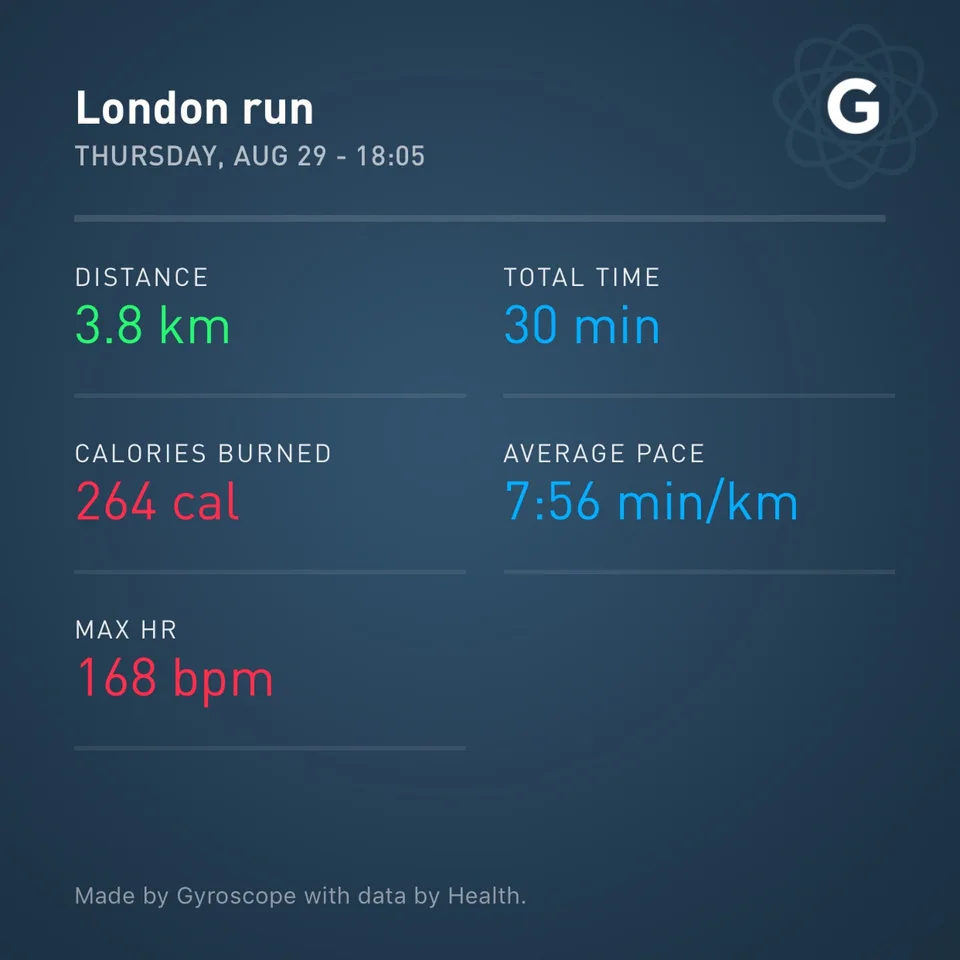
On that first run, it was a series of sixty-second bursts of running with ninety seconds in between each one, for maybe twenty minutes. I could barely manage hose sixty seconds runs without being puffed out! The kids initially enjoyed it, and we ran around our local park.
My guide was Sanjeev Kohli, and I enjoyed his dry humour and light-hearted approach, but you can pick from other folks — Michael Jordan for instance.
Since that first run at the end of August, I’ve been running at least three times every week! The app steadily moves up through levels of difficulty and duration.
I’m not sure why it took me until week six to tweet about it, perhaps I didn’t want to make a public promise about something I might drop. But I did tweet. It’s now become a thread of my progress from those early runs to what I’m doing today.
Here’s me on 15th of October:
And four days later I’d completed my first 5k run. Each Saturday at the park at the end of my road, there’s a Parkrun. If you’re not familiar, it’s a regular meetup on Saturdays all over the world where folks get together to run or walk five kilometres.
A few weeks later:
Then on Christmas day:
And I started a new decade with something of a challenge:
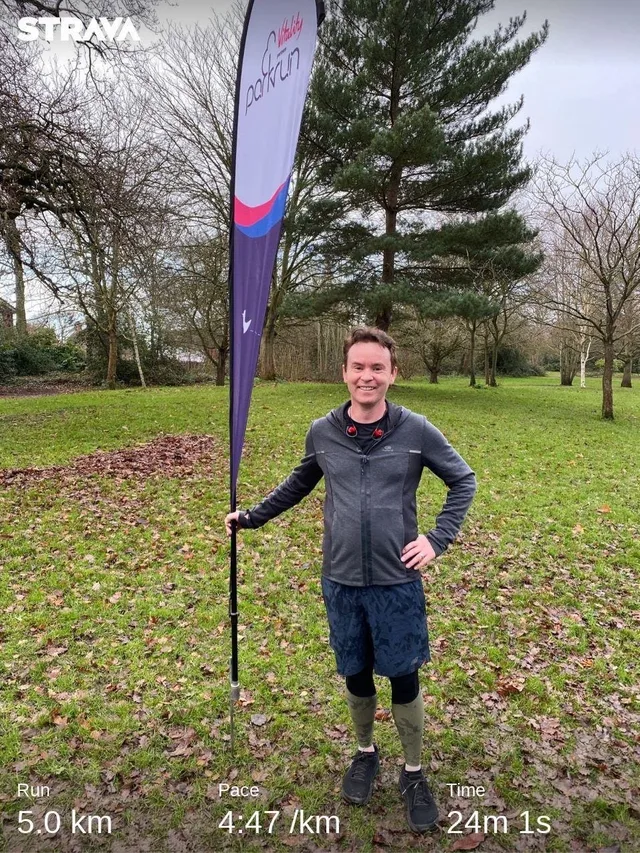
Each week, I’ve been steadily getting faster and running further. I’m now closing in on twenty-two minutes to run those five kilometres and completing at least one ten-kilometre run once per week.
If you’d asked me at the start of 2019 about any of this, I’d have laughed at the thought that I’d be running like this.
Perhaps this is where that sometimes super useful autistic, laser-focus comes in handy. There’s so much about running that lends itself to the kind of personality that loves collecting 33,562 typefaces at the age of fifteen and trying to be able to name them all.
The results so far
Let’s talk about results then! I’m now running three times per week and running further and faster each week too:
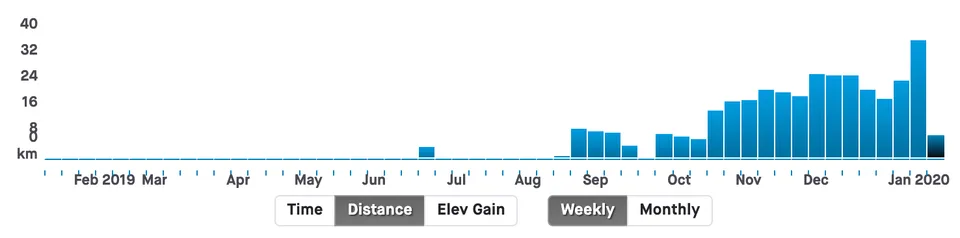
One noticeable impact of running is that you lose weight as you go. This week I’ve got back to exactly where I was last year!
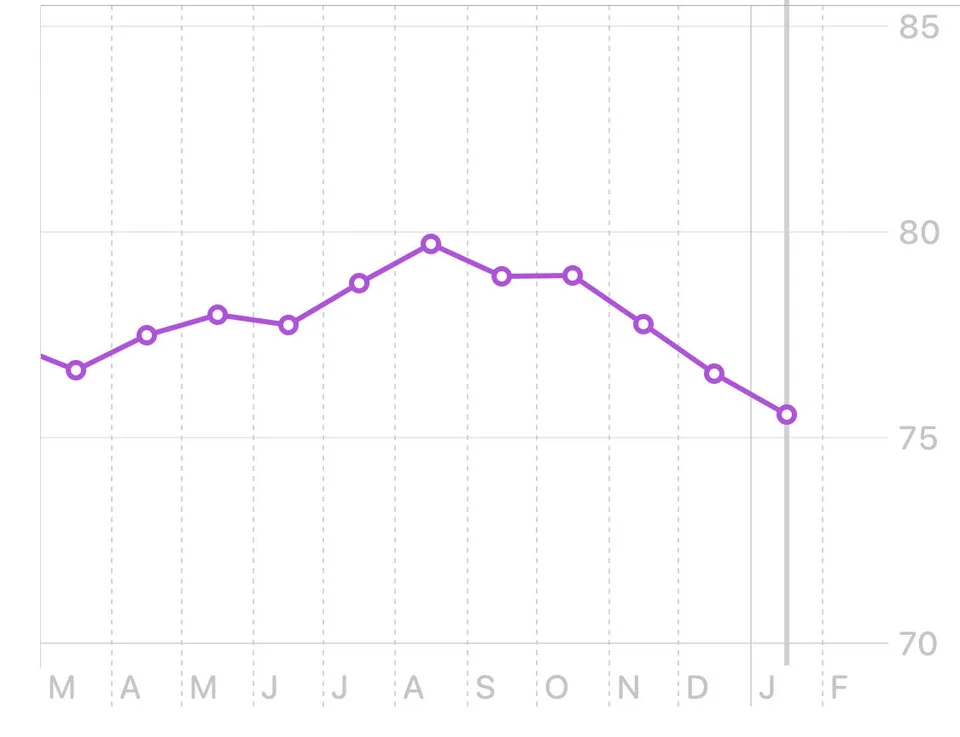
This is at a steady, healthy rate too. I’m not doing any crash dieting here. I’ve adjusted my diet somewhat over the year, to try to get it more climate-change-compatible. Less meat, more nuts, seeds and vegetables but I’m not following any particular plan. I just added running and over five months lost the five kilos I’d gained.
There’s more than that, though. The lethargy I mentioned — that inability to get out of bed at the weekend — it’s not entirely gone, but I’ve got a real purpose to get out of bed in the morning. I get up earlier most days of the week now, and I don’t feel the need to have a slow start even on the days when I’m not running.
Even more than the loss of lethargy, I’m finding that while I’m running, I get time to think things through a lot more than if I’m compulsively staring at the screen. My screen-time is down considerably, and I’m feeling better for it. I’d generally say, taking up running has had a beneficial effect on my overall mental health. I just feel happier, stronger and more able to deal with challenges that come along.
Doing something like this requires support from other people. For me, my family are super encouraging. If you’re reading this thinking “sounds great, but I don’t have a family to rally around me, or know any runners to help me”, you might find Strava useful. I’ve set up an account on there and share my runs as I go. I have a tiny following of thirty or so people, but goodness me, every “like” on one of my posts, or thoughtful comment, is so helpful to keep me motivated. You’ll be surprised who pops up from your contacts list or Facebook friends who’re also doing some running and may want to share a few tips. To those following me on Strava, thank you for your encouragement!
My challenge to myself this year
So, what now? I’ve just told you how I got away from the screen, started running, slowly improved, sped up, got to a 5k, then a 10k… I think you know where this is going! I’ve now signed up for three running events. I won’t call them “races” because, well, I’m not going to win any of them, but I’m going to try to complete them in a good time for me.
- First, the London Winter Run, a 10k run around central London. I’m going to try to complete it in less than 50 minutes.
- Then, on my birthday weekend, 29th of March, I’m going to be running my first half marathon, the London Landmarks Half Marathon.
- And then just a month later, I’ve just found out that I have a place in the London Marathon on the 26th of April.
Through all this, I’ll be raising some much-needed funds for the folks who run the National Autistic Society. They’re a well-organised charity that’s worked for years in the UK and more broadly to put forward a positive, realistic image of what autism is all about, and continues to support research on the topic.
I’m quite frustrated in some ways that I’ve missed out on understanding myself in such a fundamental way. I feel like I’ve only seen a small part of the picture of myself for too long, and I’m now zooming out.
Luckily this is at a time when two very important people in my life have also discovered that they are somewhat different from their peers, and can grow up knowing it.
Shifting awareness about autism
So I’m pleased that kids who are growing up in a world where folks are being similarly diagnosed at an age where they can form a foundational understanding of themselves. And I find it so helpful seeing prominent, talented people now talking about this.
Greta Thunberg and Chris Packham spring to mind as people who I would count as role models for autistic kids. One of the “superpowers” I often read about around autistic folks, is our strong moral compass. I’ve fallen out with people in the past because I just couldn’t work on something that was misaligned with what I thought was the right thing to do.
Given some of the horrific news that’s emerging around global heating, and how terrible feedback loops are now kicking in in Australia for instance, I think we’ll need people with that unwavering moral conviction to make change happen. And in a world increasingly driven AI, creativity and innovation are going to become rare and valuable skills — folks who have autistic skills including deep focus, or combining diverse references, I believe will be in high demand.
It’s a bit late for me to make huge changes in my life based on what I now know. I’ve already adapted over time, but I’m using this new information to help make sure that I have good relationships at work, I focus even more than I have done on working well with others, and trying to reduce stress in my day-to-day.
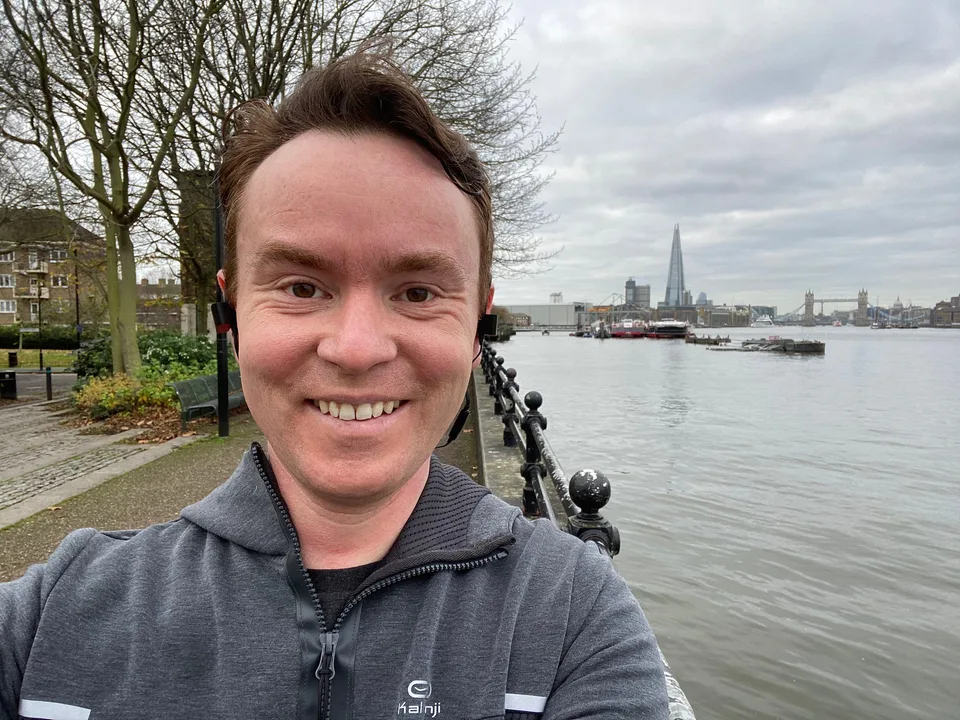
I hope you’ll support me in my marathon efforts
One of the main things I want to do over the next few years is to raise awareness that there are lots of folks who fall into the category of “autistic”, and we’re talented, capable people who can make a huge difference to the world. We may have a few quirks or may find some things difficult, but the modern world will do well to include autistic folks who have a wide range of skills and abilities.
So, I’ll run. And I’ll be posting online about how I’m doing as I go. And every kilometre that I run will be to try to get us closer to that future.
I’d love to have your support along the way an occasional thumbs up on my Strava page would be lovely. But even more than that…
It would be wonderful if you’d contribute via my fundraising page.
Thanks for reading, and if this inspires you to download the Couch To 5K app, then go and do it, and happy running!
Cheers,
Edited in September 2026 to take out some detail about my children. The rest is as I wrote it in January 2020.
Around the same time
- Oak National AcademyWork · 2020
- Oak National AcademyWork · 2020
- WPStatic TestProjects · 2020
- The goal isn’t to run the marathon, it’s to become the kind of person who runs marathonsWriting · 2020
Earlier in writing: ✔︎ See the kids during daylight hours. Later in writing: The goal isn’t to run the marathon, it’s to become the kind of person who runs marathons.
About this piece
First published on Medium, .